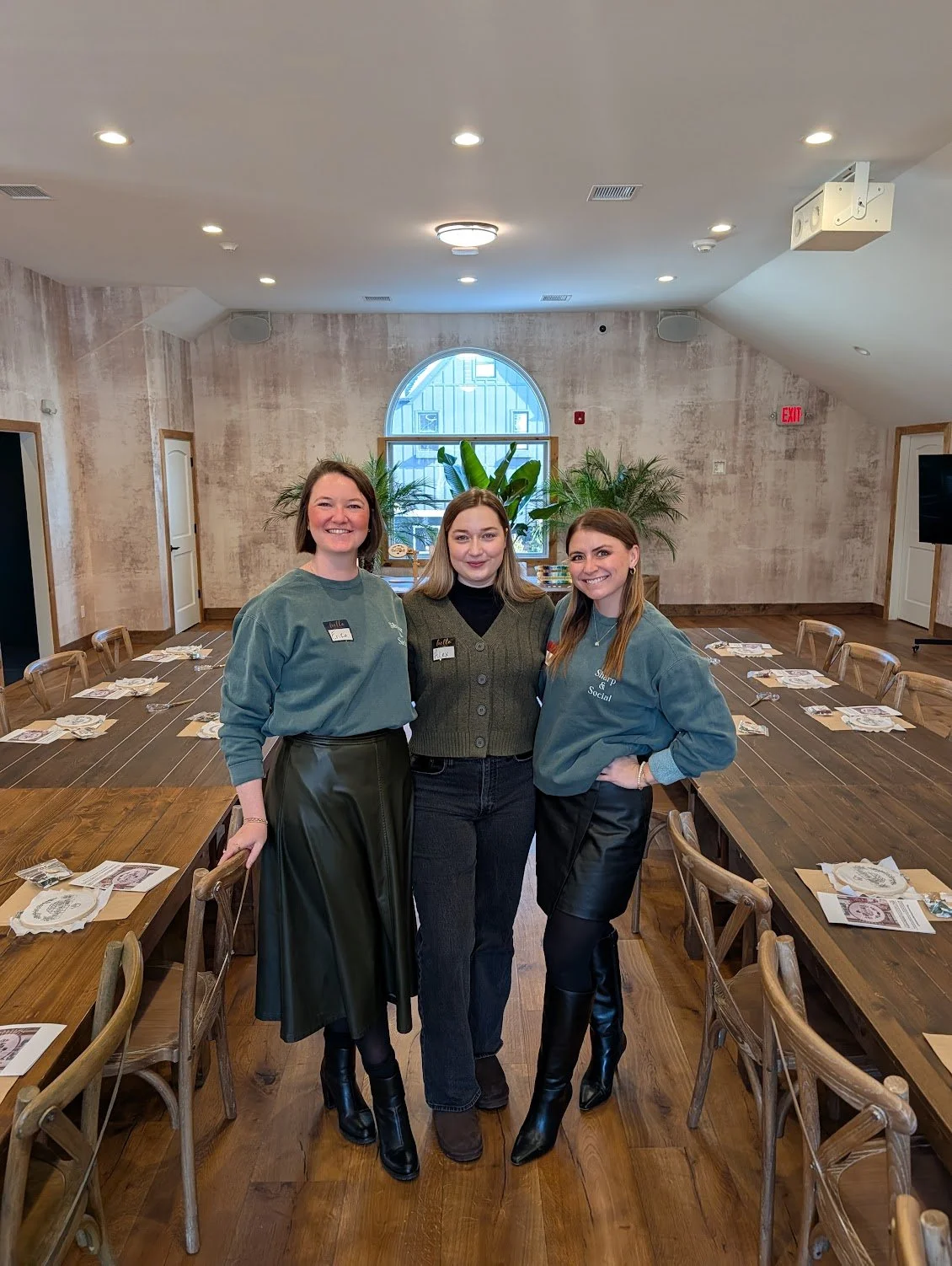
The Social Thread
Frogged (A Eulogy for the Rows That Didn’t Make It)
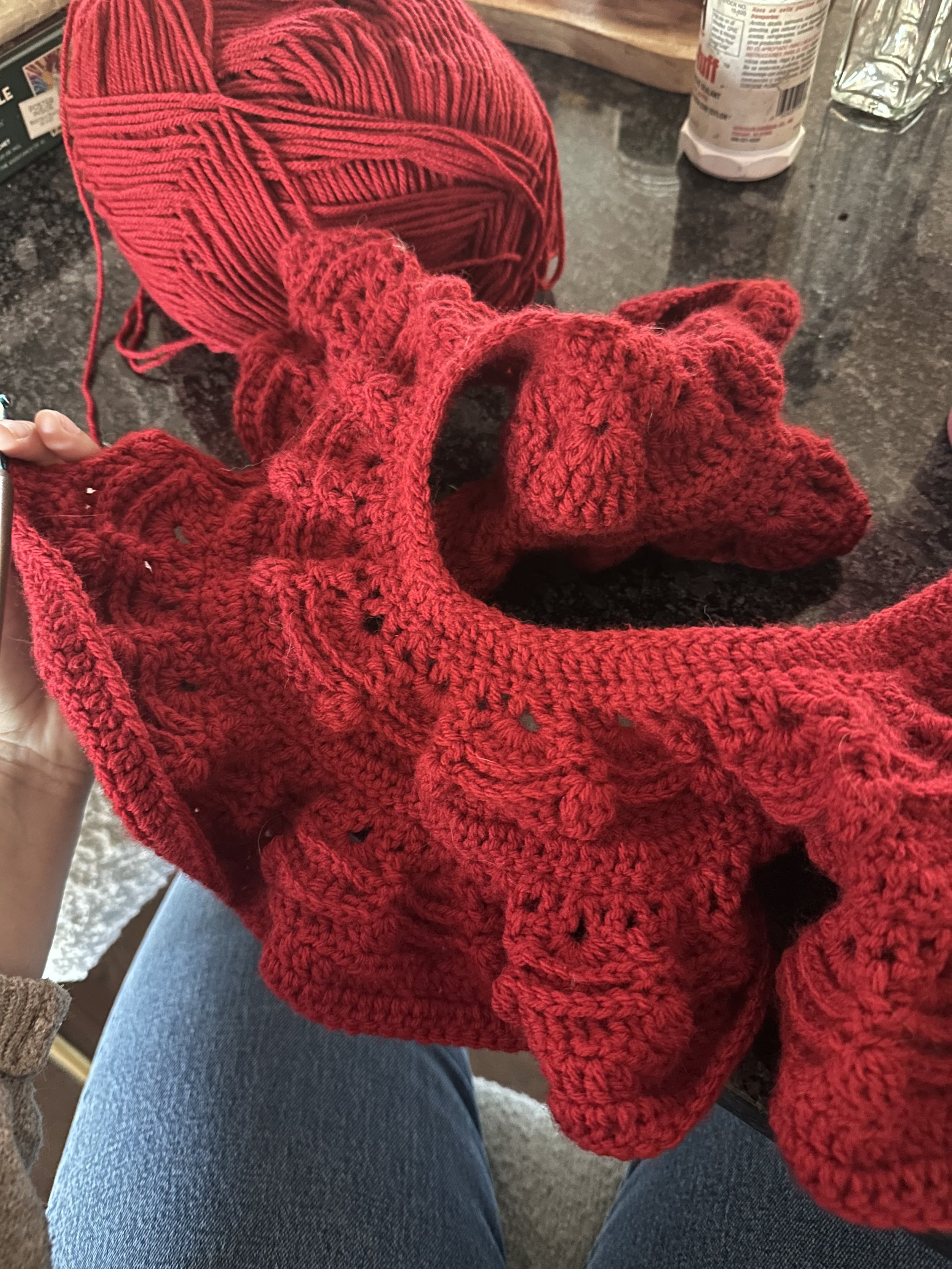
We are gathered here today in the quiet pages of this blog to mourn a devastating, tragic loss. We are here to pay our respects to Rows 14 through 32 of my current Christmas Tree Skirt project.
They were beautiful. They were ambitious. And they were entirely, completely off count.
For the uninitiated, “frogging” is the term makers use for ripping out their stitches. Why? Because you have to rip-it, rip-it, rip-it. (Yes, fiber arts humor is dark). It is the ultimate equalizer in the craft world. It does not matter how many years you have been doing this; the frog comes for us all.
The Crime
The tragedy occurred last week. As the co-founder of Sharp & Social, I pride myself on maintaining a high standard of precision. But as a human being who enjoys a good martini and excellent gossip, the math simply stopped mathing.
I was mid-sentence, deeply invested in a story about someone’s chaotic workplace drama, blindly throwing my crochet hooks into stitches. I felt like a master. I felt like a machine.
I was, in fact, creating a shape that does not exist in Euclidean geometry.
The Discovery
The next morning, in the cold, unforgiving light of day, I pulled the project out of my bag. It didn’t look like a Christmas Tree Skirt. It looked like a ruffle that had given up on its dreams. I counted the stitches. I counted them again. I tried to use “creative tension” to make it look intentional.
But deep down, I knew the truth. The project was compromised.
The Ceremony
There is a specific sound that accompanies the death of a row. It’s that aggressive, rhythmic zzzzzzzzzzzip of yarn separating from itself. It is the exact sound of your pride leaving your body. As I pulled the thread, watching hours of work dissolve back into a sad, kinky pile of crinkled yarn, I had to remind myself of the golden rule of crafting:
We do not judge the progress by the finished piece alone.
The hours spent on those lost rows weren’t a waste. They were the price of admission for a hilarious night with friends. Those rows died so that my yapping could thrive.
So here’s to the stitches that didn’t make it to the final frame. You were loved. You were temporary. And you are currently being rewound into a ball so we can try this whole thing again.
Rest in pieces, Alyssa
The Anatomy of a Craft Store Trip
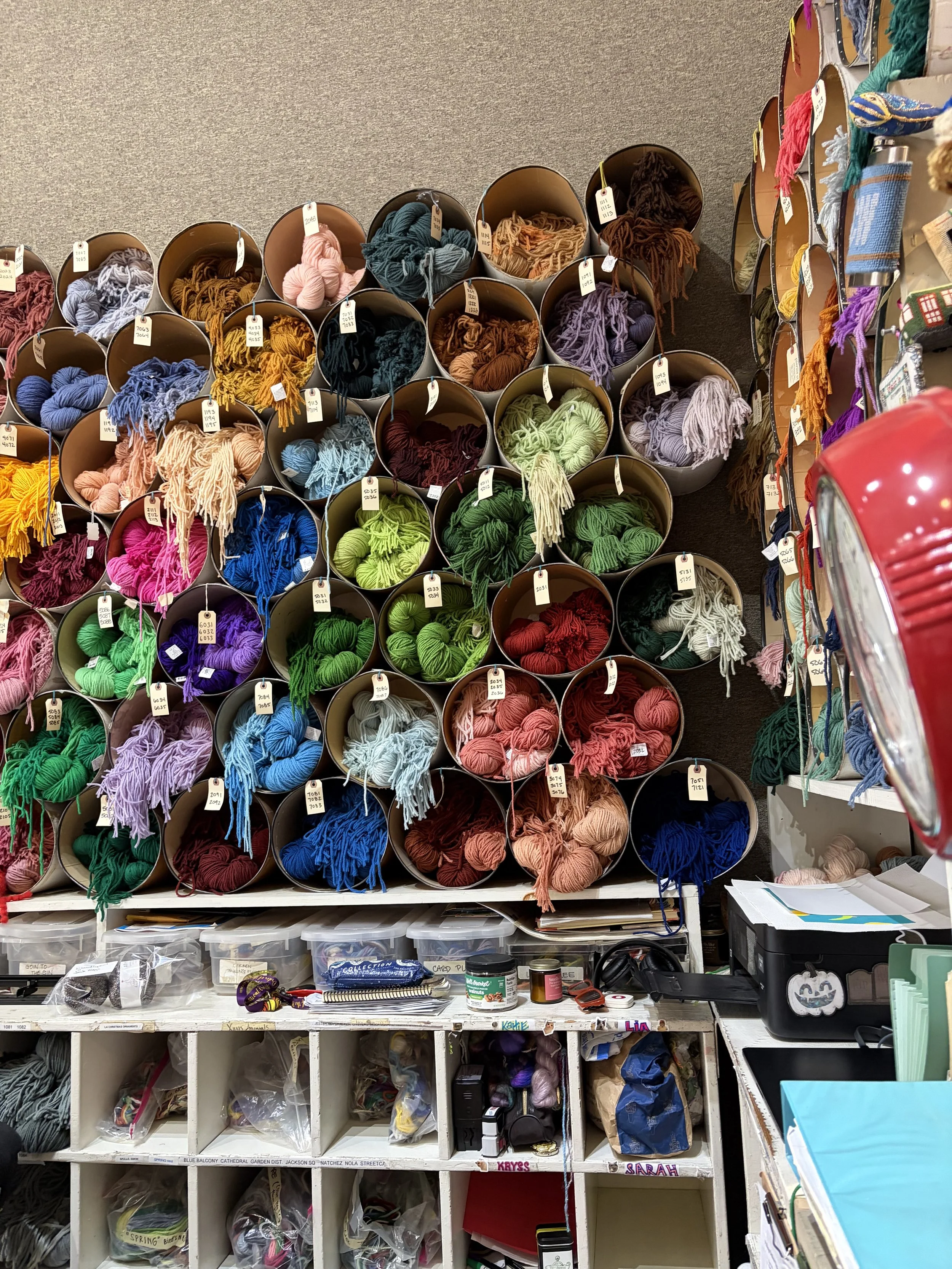
There is a scientific phenomenon that occurs the moment a maker steps through the doors of a craft store. Time dilates. Bank accounts weep. The rational brain, which normally manages complex professional operations and meticulous scheduling, completely dissolves, leaving behind only a primal urge to gather shiny objects like a crow.
I don’t care if you are an elite needle-pointer or a beginner crocheter, we all live through the exact same three acts.
Phase 1: The Delusion
It starts with a lie. You stand in your studio, look at your workspace, and say out loud to an empty room, “I just need a single skein of black embroidery floss. One. I will be in and out in five minutes.” You don’t grab a cart. You don’t even grab a basket, because taking a basket is an admission of weakness. You walk into the store with your car key sin one hand and your dignity in the other.
Phase 2: The Possession
You make it to the aisle. You find the black floss. Your mission is complete. But then, your eyes wander three inches to the left.
“Oh, look at that jewel-tone thread.” The demon on your shoulder whispers. “If you don’t buy it, who will protect it? It looks lonely.”
Suddenly, you are wandering into the yarn section. You see a velvet chenille. You don’t have a pattern for it, but you touch it anyway. Your hands are full. The black floss is trapped under your armpit. You are juggling three skeins of hand-dyed wool, a specialized crochet hook size you already own four of, and a pack of gold-plated needles because “they feel luxurious.” You look like a squirrel trying to carry too many acorns before a blizzard. You are no longer a girl shopping: you are a dragon hoarding treasure.
Phase 3: The Smuggle
You walk out $90 poorer, holding a shopping bag that weighs more than your conscience.
The final phase is the trek from the driveway to the house. You sneak the bag through the front door, bypassing your spouse with the stealth of an international jewel thief. If they ask what’s in the bag, the correct response is always a vague, “Oh, just yarn for my project.”
Technically, it’s not a lie. If the apocalypse comes, my house will be freezing, but we will all have exceptionally well-constructed, custom-stitched coasters.
Stay sharp,
Alyss
Unraveled: A Love Letter To My Most Chaotic WIPS
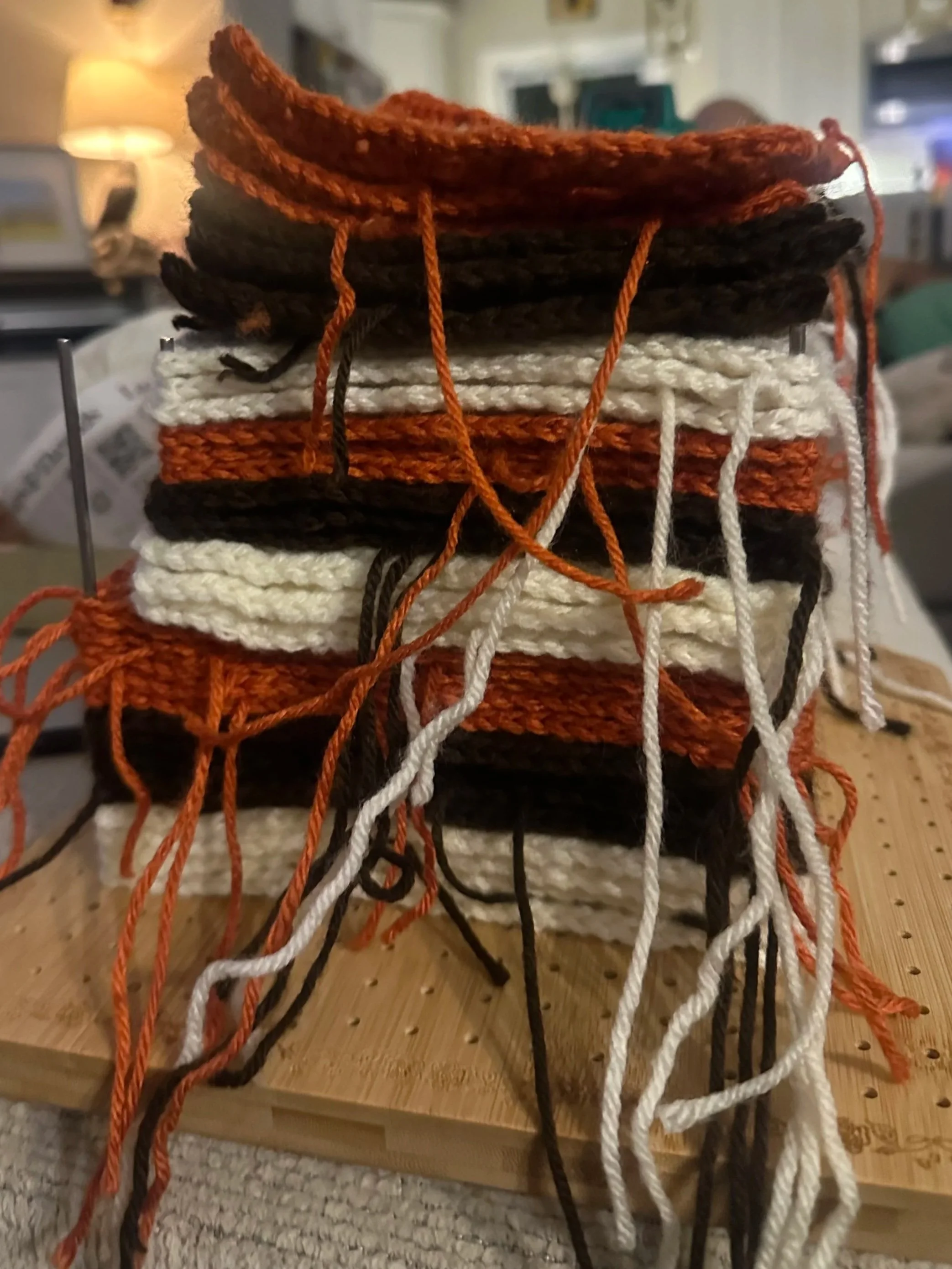
To the ones I left behind,
You are currently tucked into the dark corners of my office, resting in the velvet shadows of half-zipped project bags and the bottom of wicker baskets. You are tangled, you are dusty, and you are– by all accounts of the word, a mess.
To the “Vacation Stitch” I started in New Orleans: I love you, even if you are 40% cotton, and 60% dried hurricane juice. You were born on a balcony in the French Quarter during Mardi Gras, and you have the uneven tension to prove it. Every time I look at your lopsided borders, I see exactly how many martinis I had before I decided that it didn’t really matter what my french knots looked like. You’re a disaster, but you’re my disaster.
To the sweater with the missing size H hook: Where did it go? Did it run away with my sanity? We were so happy together until about row 47. I’m sorry I abandoned you when the math stopped making sense. Now you sit in a tote bag like a jilted lover, half-unraveled and holding a grudge. I’m sorry I haven’t bought a replacement hook. It feels like cheating. Just know that every time I start a new project, I’m thinking of you (and how much I don’t want to weave in your ends.)
To the “I Can Make That for $10” spite project: We both know I started you out of pride. I wanted to prove I could do it better, faster, cheaper. You took $80 in hand-dyed silk and three years of my life just to tell me I should have bought the one in the store. I love you for being the most expensive “cheap” thing I’ve ever owned. You are proof that sometimes, my ego writes the check that my fingers can’t cash.
To the tangled nest of bobbins at the bottom of my basket: You look like a colorful pasta accident. You are the physical manifestation of my social side– too much yapping, not enough winding. I love you for the chaos you bring to my organized craft bags. You remind me that if I’m not making a mess, I’m probably not having enough fun. But also, I’m too stressed out to fix you.
I may never finish any of you. I may eventually harvest your goods for a newer, shinier “Current Work.” But you were there for the journey, the laughs, and the spills.
You’re a hot mess, but you’re my favorite kind.
Stay Tangled,
Alyssa
The Sharp Martini - A Recipe & Some History
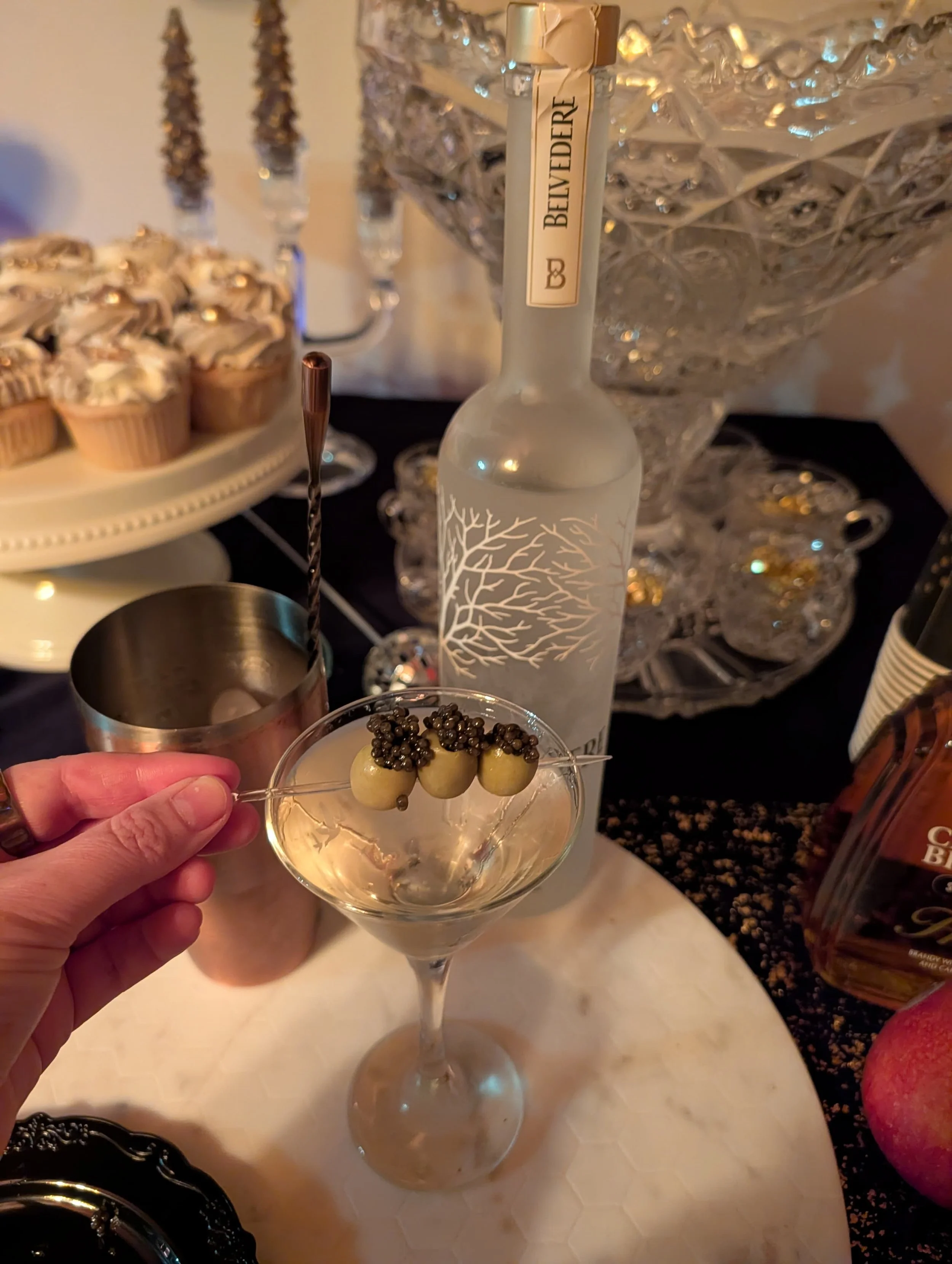
There is no cocktail more “Sharp” than the Martini. It is a study in minimalism, a masterclass in temperature, and a statement to the power of the right tools. At Sharp & Social, it has become our mascot. The clean lines of the glass reflecting the precision of a perfectly executed french knot.
But before it was the icon of the mid-century social scene, the Martini had a history as layered and complex as a 17th-century embroidery sampler.
A Brief, Spirited History
The origins of the Martini are as disputed as the “correct” way to hold your embroidery tension. While many claim it evolved from the “Martinez” cocktail in the mid-1800s, it wasn’t until the early 20th century that the drink we recognize today, the dry, gin forward classic, took center stage.
In the 1920s, the Martini became the ultimate symbol of the “Modern” era. It was sophisticated, it was efficient, and during Prohibition, it was a rebellious art form. Much like hand embroidery in a world of machine made fast fashion. The Martini is a choice to favor the slow and crafted over the mass produced.
The Anatomy of the Martini
A true Sharp & Social Martini isn’t just about the alcohol, it’s about the ritual. We prefer ours with Kettle One Vodka, ice cold, and extra olives.
The Tools:
A chilled Coupe or Nick & Nora glass
A mixing glass
A long bar spoon
The Ingredients:
2.5 oz Kettle One Vodka
.5 oz Dry Vermouth
.5 Olive Brine
As many olives as you can fit
The Method
Chill your glass. A room-temperature Martini is like a loose embroidery hoop, it simply won’t work.
Stir, don’t shake. James Bond was wrong. Shaking aerates the drink, making it cloudy. To keep it sharp and crystal clear, stir your gin and vermouth with plenty of ice for exactly 30 seconds.
Strain. Pour into your chilled glass.
Garnish.
Why the Martini?
We often get asked why we chose a distillery for our Craft & Yap sessions. The answer lies in the parallel between the distiller and the maker. Both require patience, a respect for the ingredients, and a keen eye.
When you sit at Dismal Harmony with your craft in one hand, your martini in the other, you are participating in two of the oldest forms of human social ritual: the gathering of the community and the appreciation of the craft.
A Martini is like a poem: it should be short, sharp, and leave you feeling slightly more inspired than you were before
Join the next round!
Ready to test the recipe in person? Join us at our next Craft & Yap. Whether you’re working on a new pattern or just perfecting your sip, there’s a seat with your name on it!
The Point of the Needle: A Brief and Sharp History of Hand Embroidery
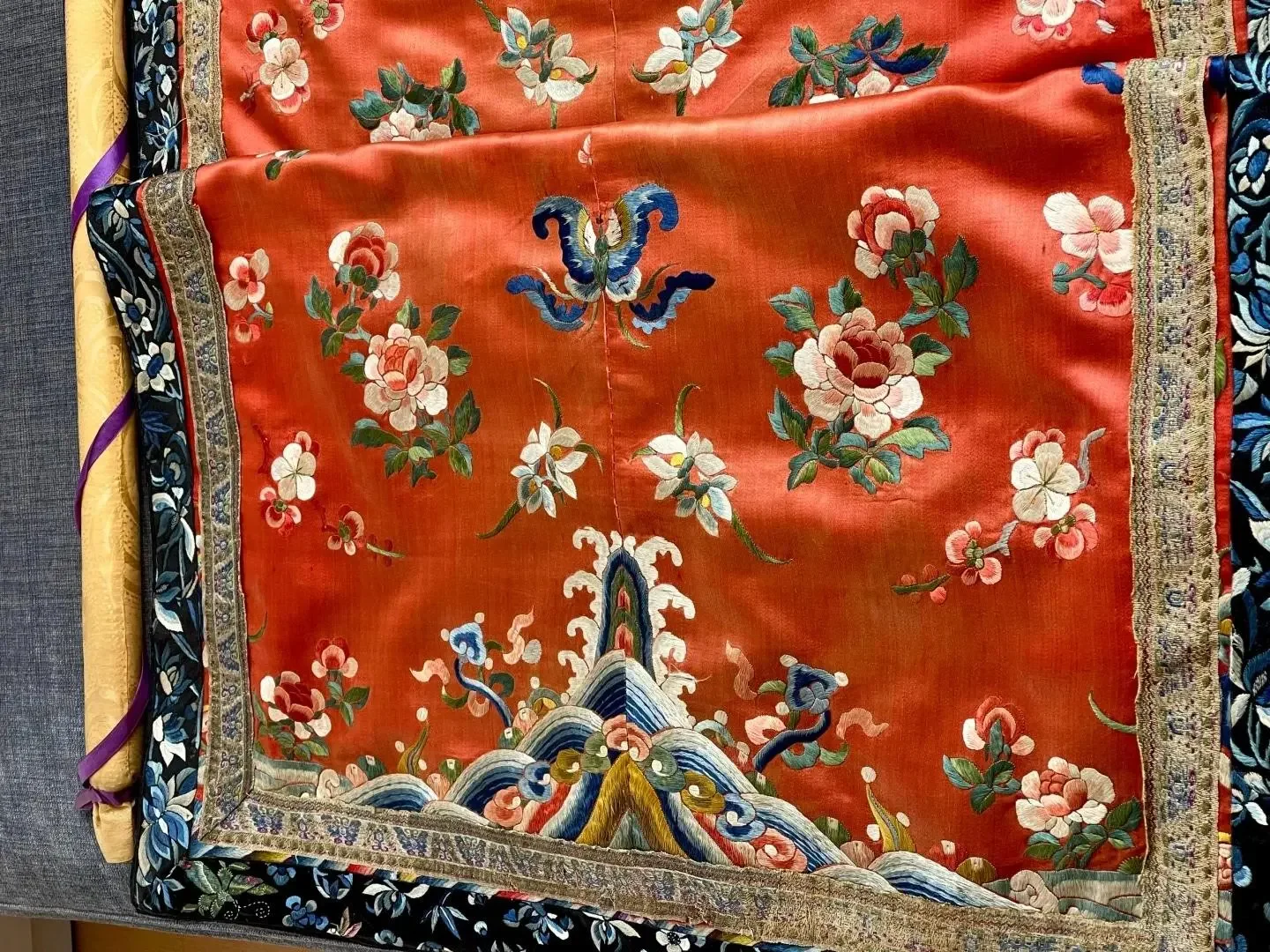
Hand embroidery is one of the world’s oldest forms of storytelling. Before we had printing presses or digital archives, we had the needle. It has been used to crown kings, protect soldiers, and – in its quietest moments – connect friends over a shared table.
At Sharp & Social, we often say we are “stitching into the social fabric,” but the truth is, that fabric has been centuries in the making.
The Timeline of the Thread
30,000 BCE: The First Stitches
Archeological finds in Russia show fossilized remains of clothing heavily decorated with ivory beads, hand-stitched into animal hides. This wasn’t just for warmth; it was the first recorded instance of styling clothing for visual aesthetics.
11th Century: The Bayeux Tapestry
Perhaps the most famous “Long-form” story ever told. This 230-foot-long masterp;iece isn’t actually a tapestry; it’s wool embroidery on linen. It was the first storybook of 1066, documenting the Norman Conquest for an illiterate public.
The 1600s: The Golden Age of Professionalism
The 17th Century saw the rise of professional embroidery guilds. Men and women spent years in apprenticeships to master “Goldwork” and “Silk Shading.” This was the era of Opus Anglicanum, which was so coveted that it was exported all over Europe as a luxury status symbol. It became more valuable than gold. Hand embroidery was often used by royalty as diplomatic gifts to settle wars or secure marriages.
The 1800s: The Victorian Era and The Domesticated Hoop
With the rise of the “Leisured class,” embroidery moved from professional guilds into the home. This gave birth to “Berlin Woolwork” and the tradition of samplers, a way for young girls to practice their alphabet and their patience simultaneously. Samplers were used as a living resume. If a woman needed to find work, her sampler proved her level of literacy, her attention to detail, and her technical skill.
The 1900s: WWII and Therapeutic Advantages
During WWII, embroidery was used as a form of therapy for wounded soldiers (i.e. occupational therapy). Many soldiers stitched regimental skills, elaborate embroideries of their unit’s crest, as a way to pass the time and process their experiences.
From Survival to Self-Expression
There was a time when knowing how to embroider was a survival skill, a necessary part of a woman’s education to manage a household. But as the industrial revolution introduced machines that could mimic the human hand, hand embroidery shifted.
It became an act of rebellion.
Choosing to do by hand what a machine can do in seconds is a statement. It says that the process matters as much as the product. It says that we value slow hard work, and dedication in a world that demands fast results.
The Modern Thread
Today we don’t embroider because we have to; we embroider because we want to. We’ve reclaimed the hoop as a tool for mental clarity, artistic expression, and social connection.
Whether you’re embroidering, knitting, or cross stitching, you are carrying forward a craft that has survived wars, revolutions, and the rise of the digital age.
So the next time you pull your thread through the linen, remember: you aren’t just making something beautiful. You’re keeping the history of the needle alive.
The WIP Files: 3 Tips to Finally Finish That Half-Done Project
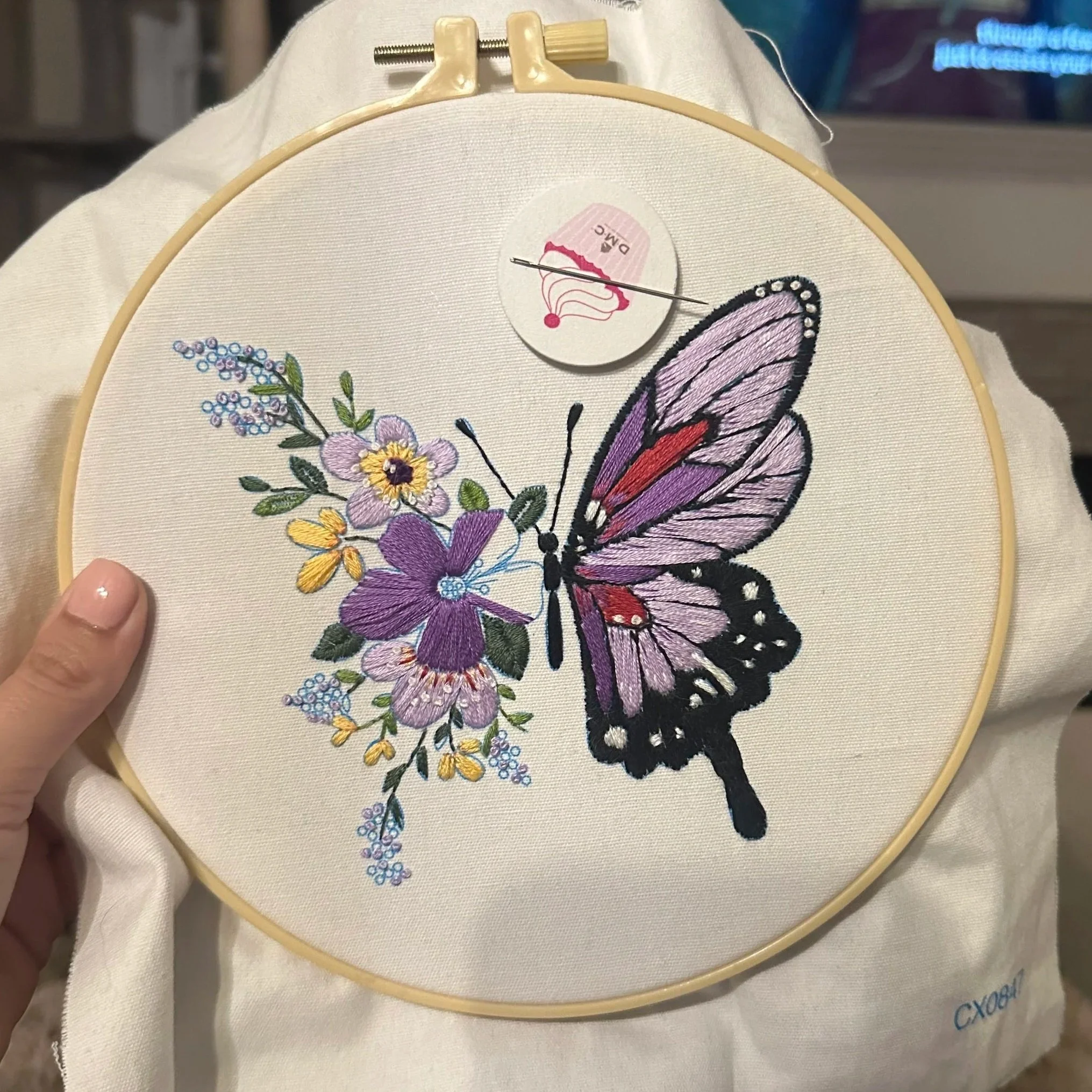
We’ve all been there.
You’re at the craft store, the yarn is plush, the linen is crisp, and the vision is clear. You start with a burst of inspiration, but then… life happens. A new project catches your eye, a stitch gets too complicated, or the “Yap” at our last event was so good you forgot to actually move your needle.
Now, that project has officially become a WIP (Work-In-Progress), relegated to the back of the closet or the bottom of a tote bag.
If you’re feeling the project guilt, this is your official permission to let it go. Here are three “Sharp” tips to help you move that WIP across the finish line, or finally decide it’s time to start fresh.
The 15-minute Sprint — Often, the reason we don’t finish a project is that it feels like a mountain. We think we need a dedicated three-hour block to make progress.
The Fix: Set a timer for 15 minutes. Put your phone in another room, pour a glass of whatever makes you happy (for me it’s a nice cab), and just stitch until your timer dings. You’ll be surprised how much of a floral border or a granny square you can knock out when you aren’t distracted by notifications. Small bursts of focus lead to finished WIPs!
Audit the “Vibe” — Be honest, do you actually like the project you’re working on? Sometimes we stop working on a WIP because the design no longer speaks to us, or the colors don’t feel right for the season.
The Fix: If the project is making you feel bored rather than inspired, frogging is your friend! Rip it out, reclaim the thread or yarn, and turn it into something that actually makes you excited to pick it up. Your hobby shouldn’t feel like homework.
Change Your Scenery — There is a specific kind of magic that happens when you take your project out of your living room and into a social setting. It’s why we created the Craft & Yap.
The Fix: Bringing a stubborn WIP to a distillery, coffee shop, or bookstore changes the energy. When you’re yapping with friends and sipping a martini, the “boring” parts of a project (like filling in a large leaf or finishing those last few rows of crochet) suddenly feel effortless. Use the collective energy of the club to power through the home stretch!
The WIP Challenge
Got a project that’s been gathering dust since 2025 (or before)? Bring it to our next Craft & Yap! We’ll provide the venue, the vibe, and the encouragement; you just bring the bag! Let’s get those projects finished together!
The Anatomy of the Perfect Craft & Yap
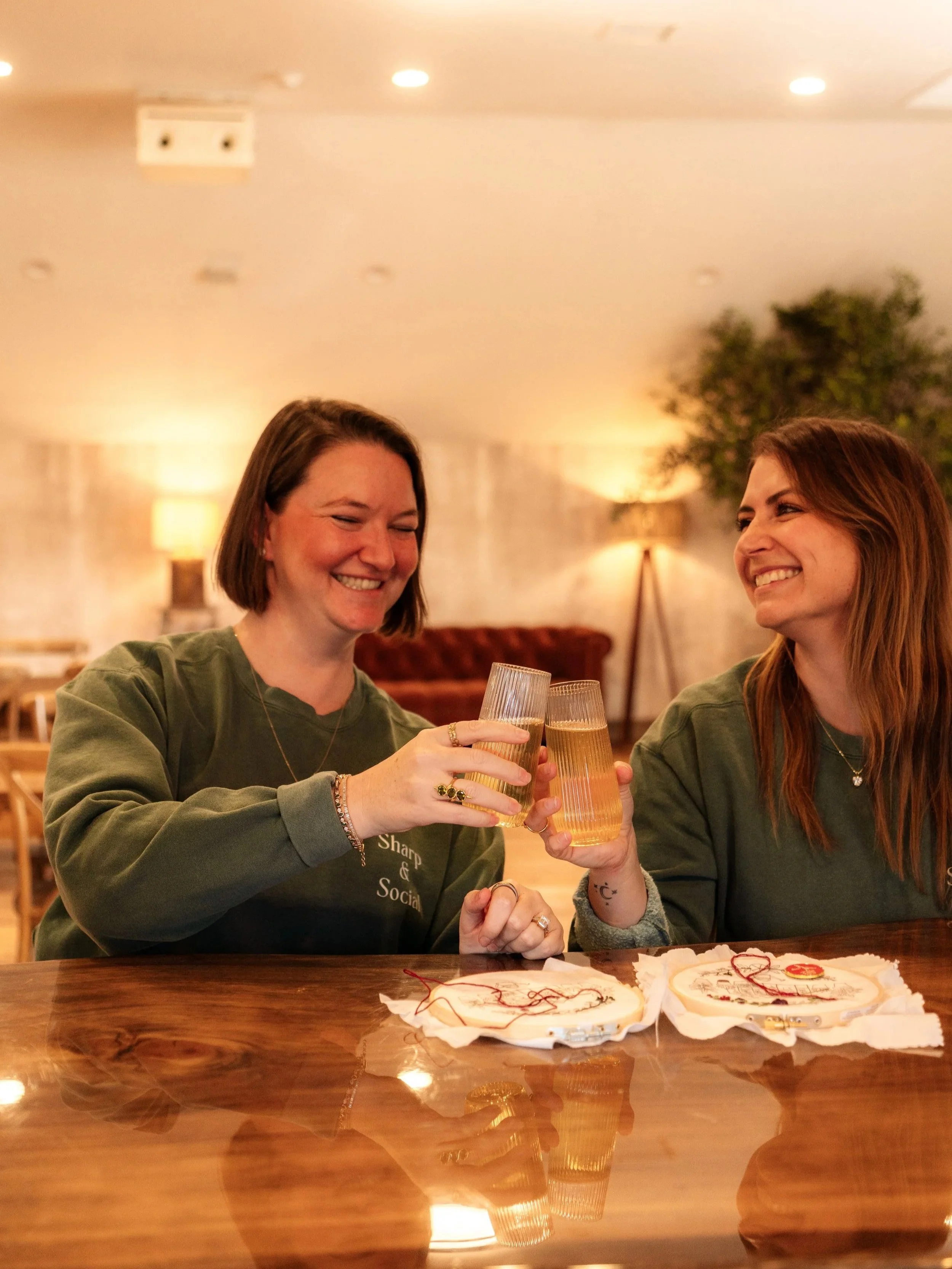
If you’ve ever wondered what actually happens when a group of makers takes over a business for the night, this is for you!
A Craft & Yap isn’t just a hobby circle; it’s a sensory experience. It’s the clink of ice against glass, the pull of thread through linen, and the low hum of five different conversations happening at once. We’ve spent a lot of time thinking about what makes these nights feel so “sharp”, and we’ve narrowed it down to four essential ingredients.
The Social Spirit — Every great yap starts with a great environment. We intentionally partner with venues like Dismal Harmony because the environment matters. There is a psychological shift that happens when you trade your desk chair for a booth. Whether you’re sipping a classic gin martini or a seasonal mocktail, the drink is the “social” half of our brand. It signals that it’s time to clock out and settle in.
The Low-Stakes Project — The “Craft” in Craft & Yap is meant to be rhythmic, not stressful. This isn’t the time to attempt a 40-hour masterpiece with fifteen different types of beads (yes, I’m talking to myself here). The perfect Yap project is something you can do while laughing, a granny square, a simple floral border, or even just untangling a mess of embroidery floss. It’s about keeping your hands busy so your mind can be present.
The “Yap” Factor — This is the heart of the collective. There is a unique kind of intimacy that happens when people work with their hands. Without the pressure of intense eye contact, the conversation flows more freely. We talk about books, work, travel, and (inevitably) the project we’ve been “meaning to finish” for six months. You might arrive alone, but by the time the second round of drinks is poured, you’ve found your people.
The Curated Atmosphere — From the playlist to the lighting, we believe the details matter. We curate a space that feels like a “Third Place” - that essential spot between home and work where you can just be. It’s a mix of creative energy and pure relaxation. We want you to come as you are, and feel the comfort to just exist.
Experience the Anatomy for Yourself
Ready to see how these ingredients come together? Securing a seat at our next Craft & Yap is the perfect place to start. Whether you’re a seasoned pro or you’ve never picked up a hook, there’s a seat at the table with your name on it!
The Sharp Guide: 5 Things I Wish I Knew Before My First Stitch
Hand embroidery is one of the most rewarding (and addictive) crafts out there, but the first few hours can feel a bit like trying to solve a puzzle in the dark.
To save you some tangled threads and frustrated sighs, here are five things I wish someone had told me before I made my very first stitch.
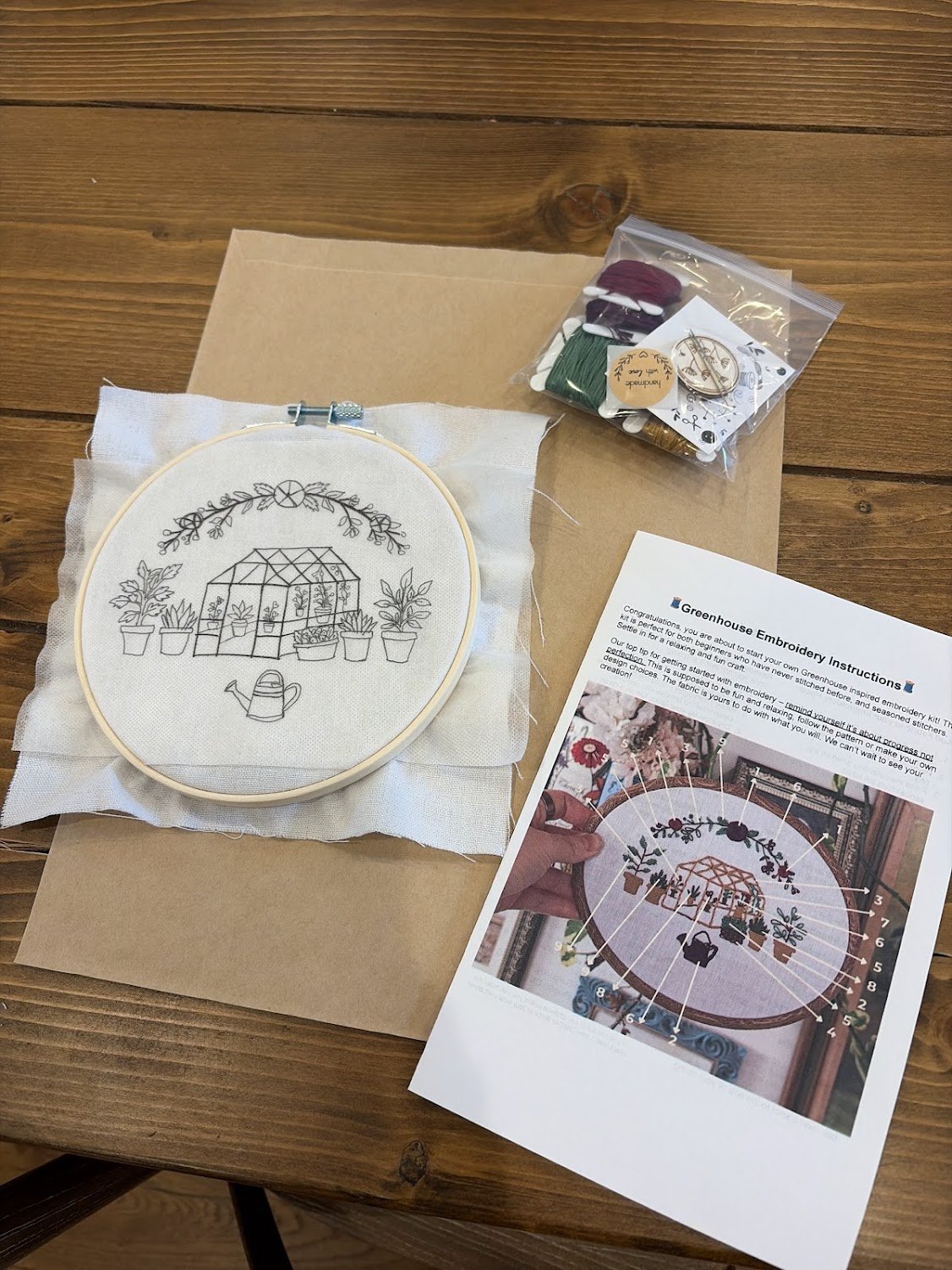
So, you’ve decided to pick up a needle. Maybe you saw a beautiful hoop on Instagram, or maybe you just needed a reason to sit at a bar and do something with your hands, other than check your email.
Whatever brought you to the table, welcome! Hand embroidery is one of the most rewarding (and addictive) crafts out there, but the first few hours can feel a bit like trying to solve a puzzle in the dark.
To save you some tangled threads and frustrated sighs, here are five things I wish someone had told me before I made my very first stitch.
Perfection is the enemy
The most common thing we hear (and say) is “I’m afraid I’m going to mess it up.” Here is a secret: you probably will. You’ll make a knot where you didn’t want one, or your circle will look a bit more like a lumpy potato.
The fix: Lean into it! Embrace the mistakes! Embroidery is a “slow craft” for a reason. If a stitch looks wonky, you can snip it out and try again, or you can leave it and call it “character.” Remember, it’s practice NOT perfection.
Your Thread is Too Long (Yes, Really)
It’s a beginner’s instinct: You want to cut a massive piece of thread so you don’t have to re-thread the needle as often. We call this “The Long Thread Curse.” The longer the thread, the more likely it is to tangle, knot, and catch on the edges of your hoop.
The Sharp Tip: Keep your thread about the length of your forearm (from your elbow to your fingertips). It will feel short at first, but your stitching will be much smoother and significantly less “knotty.”
The back of your hoop is none of our business.
There is a myth that the back of the embroidery project should look as neat as the front. Unless you are entering a high-stakes Victorian embroidery competition, this is simply not true.
The back of your work will likely look like a chaotic web of knots and stray threads. That’s okay. As long as the front looks like what you intended, you’re winning. (And if the front looks chaotic too? Well, that’s just abstract art.)
Six Strands is a Crowd
Embroidery floss (the thread) is actually made up of six individual strands twisted together. Most modern patterns - including the ones used in our workshops - usually only require two or three strands at a time.
How to do it: Cut your length of thread, roll the end of the thread between your thumb and forefinger, then gently pull out the individual strands one by one. Once you have your desired number of strands, lay them together to thread into your needle. Using fewer strands allows for much finer detail and makes fabric easier to pierce. Plus, it makes your supplies last twice as long!
A Martini is the BEST Thimble
Okay, maybe not literally (please don’t put your finger in your drink), but the philosophy stands: embroidery should be relaxed. If you find yourself hunched over your hoop with your shoulders up to your ears, take a break.
The best part of a Craft & Yap is the balance. Take a sip, talk to your neighbor, stretch your neck, and then go back to the needle. The stitches always turn out better when you’re actually having a good time.
Ready to make your first (imperfect) stitch?
If you want to learn in person (with a drink in hand and a kit ready to go) join us at our next workshop! We promise to help you through every single knot.
Why We’re Trading Scrolling for Stitching
Sharp & Social was born from a simple, slightly rebellious question that two besties asked ourselves: What happens when we reclaim our attention?
In a world that won’t stop moving, we’ve decided to sit ourselves down.
We’ve all felt it, that specific, modern exhaustion that comes from a day spent staring at blue light, navigating endless notifications, and consuming “content” that disappears the second we swipe past it. Our minds are fast, our days are cluttered, and our hands are, for the most part, idle.
Sharp & Social was born from a simple, slightly rebellious question that two besties asked ourselves: What happens when we reclaim our attention?
The Art of the Slow-Down:
Hand-embroidery is an ancient craft, but we believe it is a modern necessity. There is something transformative about the rhythm of a needle passing through taut fabric. It requires a specific type of focus, a “flow state” that you simply cannot find in a digital feed.
When you’re stitching, you aren’t just making a decorative hoop; you’re making time for yourself. You’re practicing patience. You’re allowing yourself to be a beginner. In the “Slow Stitch” movement, the goal isn’t perfection; it’s the quiet joy of the process.
Why the “Social” Matters
Let’s be honest: the traditional “sewing circle” was due for an upgrade.
Creativity shouldn’t be a solitary retreat. Some of the best ideas and deepest connections happen when we’re working with our hands and loosening up with a drink. There is a special kind of magic in the “Yap” - the casual, unfiltered conversation that flows more easily when you aren’t staring through a screen, but are instead looking down at your threads. We believe the best social network is a table full of people with needles in their hands and a drink by their side.
A Seat at the Table
Our mission is to build a “Third Place.” Not your home, not your office, but a community hub where the social fabric of our neighborhood is literally being stitched back together. We’re partnering with local businesses, highlighting neighborhood musicians, and creating space for makers of every skill level to sit together.
You don’t need to be an artist to be here. You don’t even need to know how to thread a needle. You just need a desire to disconnect from the noise, and reconnect with the person sitting next to you.
We’re trading the scroll for the stitch. We’re trading the “Like” for the laugh.
It’s time to stay sharp and get social.
Ready to join us? Our next gathering is just around the corner.