
The Sharp Martini - A Recipe & Some History
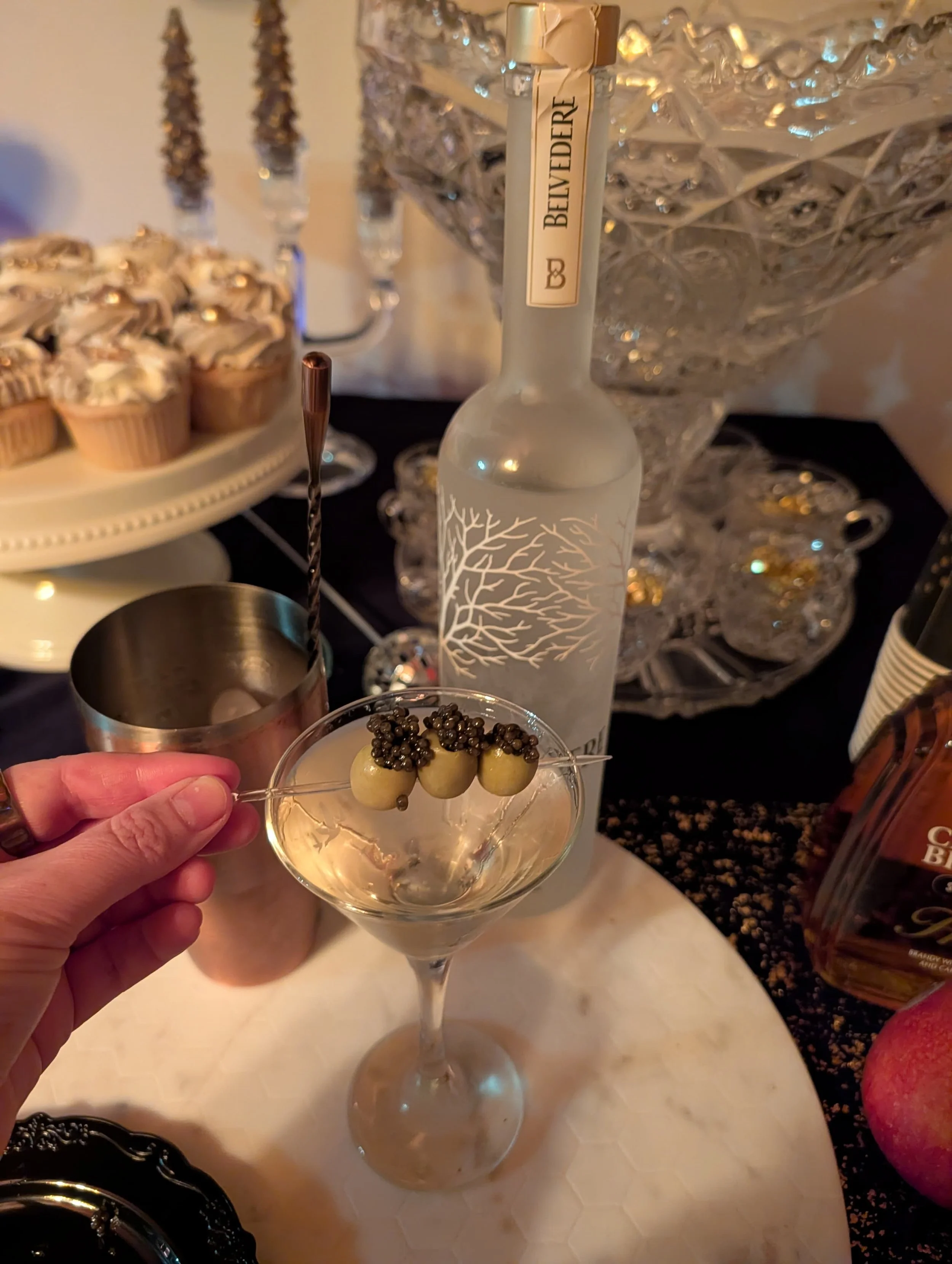
There is no cocktail more “Sharp” than the Martini. It is a study in minimalism, a masterclass in temperature, and a statement to the power of the right tools. At Sharp & Social, it has become our mascot. The clean lines of the glass reflecting the precision of a perfectly executed french knot.
But before it was the icon of the mid-century social scene, the Martini had a history as layered and complex as a 17th-century embroidery sampler.
A Brief, Spirited History
The origins of the Martini are as disputed as the “correct” way to hold your embroidery tension. While many claim it evolved from the “Martinez” cocktail in the mid-1800s, it wasn’t until the early 20th century that the drink we recognize today, the dry, gin forward classic, took center stage.
In the 1920s, the Martini became the ultimate symbol of the “Modern” era. It was sophisticated, it was efficient, and during Prohibition, it was a rebellious art form. Much like hand embroidery in a world of machine made fast fashion. The Martini is a choice to favor the slow and crafted over the mass produced.
The Anatomy of the Martini
A true Sharp & Social Martini isn’t just about the alcohol, it’s about the ritual. We prefer ours with Kettle One Vodka, ice cold, and extra olives.
The Tools:
A chilled Coupe or Nick & Nora glass
A mixing glass
A long bar spoon
The Ingredients:
2.5 oz Kettle One Vodka
.5 oz Dry Vermouth
.5 Olive Brine
As many olives as you can fit
The Method
Chill your glass. A room-temperature Martini is like a loose embroidery hoop, it simply won’t work.
Stir, don’t shake. James Bond was wrong. Shaking aerates the drink, making it cloudy. To keep it sharp and crystal clear, stir your gin and vermouth with plenty of ice for exactly 30 seconds.
Strain. Pour into your chilled glass.
Garnish.
Why the Martini?
We often get asked why we chose a distillery for our Craft & Yap sessions. The answer lies in the parallel between the distiller and the maker. Both require patience, a respect for the ingredients, and a keen eye.
When you sit at Dismal Harmony with your craft in one hand, your martini in the other, you are participating in two of the oldest forms of human social ritual: the gathering of the community and the appreciation of the craft.
A Martini is like a poem: it should be short, sharp, and leave you feeling slightly more inspired than you were before
Join the next round!
Ready to test the recipe in person? Join us at our next Craft & Yap. Whether you’re working on a new pattern or just perfecting your sip, there’s a seat with your name on it!
