
The Point of the Needle: A Brief and Sharp History of Hand Embroidery
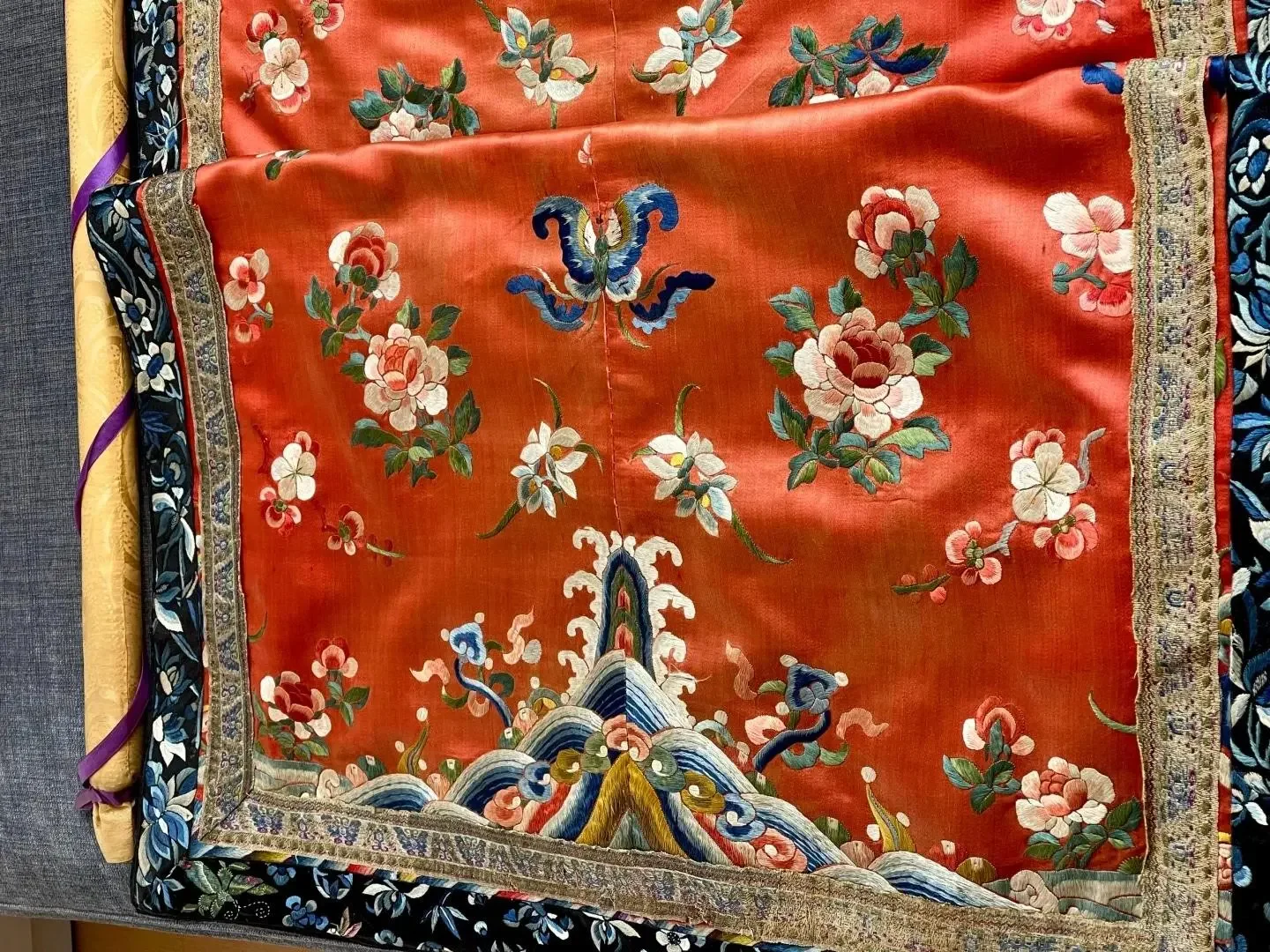
Hand embroidery is one of the world’s oldest forms of storytelling. Before we had printing presses or digital archives, we had the needle. It has been used to crown kings, protect soldiers, and – in its quietest moments – connect friends over a shared table.
At Sharp & Social, we often say we are “stitching into the social fabric,” but the truth is, that fabric has been centuries in the making.
The Timeline of the Thread
30,000 BCE: The First Stitches
Archeological finds in Russia show fossilized remains of clothing heavily decorated with ivory beads, hand-stitched into animal hides. This wasn’t just for warmth; it was the first recorded instance of styling clothing for visual aesthetics.
11th Century: The Bayeux Tapestry
Perhaps the most famous “Long-form” story ever told. This 230-foot-long masterp;iece isn’t actually a tapestry; it’s wool embroidery on linen. It was the first storybook of 1066, documenting the Norman Conquest for an illiterate public.
The 1600s: The Golden Age of Professionalism
The 17th Century saw the rise of professional embroidery guilds. Men and women spent years in apprenticeships to master “Goldwork” and “Silk Shading.” This was the era of Opus Anglicanum, which was so coveted that it was exported all over Europe as a luxury status symbol. It became more valuable than gold. Hand embroidery was often used by royalty as diplomatic gifts to settle wars or secure marriages.
The 1800s: The Victorian Era and The Domesticated Hoop
With the rise of the “Leisured class,” embroidery moved from professional guilds into the home. This gave birth to “Berlin Woolwork” and the tradition of samplers, a way for young girls to practice their alphabet and their patience simultaneously. Samplers were used as a living resume. If a woman needed to find work, her sampler proved her level of literacy, her attention to detail, and her technical skill.
The 1900s: WWII and Therapeutic Advantages
During WWII, embroidery was used as a form of therapy for wounded soldiers (i.e. occupational therapy). Many soldiers stitched regimental skills, elaborate embroideries of their unit’s crest, as a way to pass the time and process their experiences.
From Survival to Self-Expression
There was a time when knowing how to embroider was a survival skill, a necessary part of a woman’s education to manage a household. But as the industrial revolution introduced machines that could mimic the human hand, hand embroidery shifted.
It became an act of rebellion.
Choosing to do by hand what a machine can do in seconds is a statement. It says that the process matters as much as the product. It says that we value slow hard work, and dedication in a world that demands fast results.
The Modern Thread
Today we don’t embroider because we have to; we embroider because we want to. We’ve reclaimed the hoop as a tool for mental clarity, artistic expression, and social connection.
Whether you’re embroidering, knitting, or cross stitching, you are carrying forward a craft that has survived wars, revolutions, and the rise of the digital age.
So the next time you pull your thread through the linen, remember: you aren’t just making something beautiful. You’re keeping the history of the needle alive.
