
The Sharp Guide: 5 Things I Wish I Knew Before My First Stitch
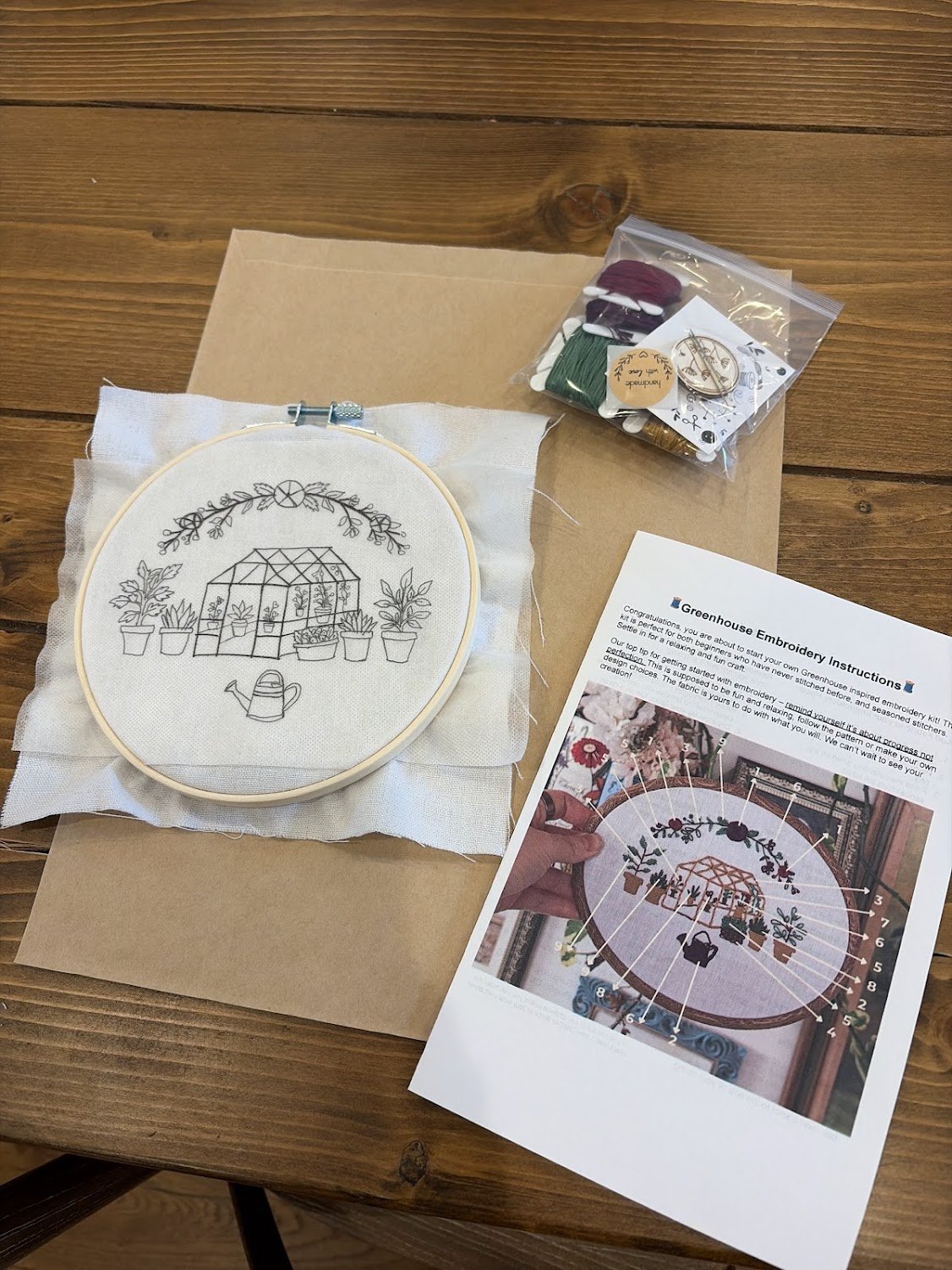
So, you’ve decided to pick up a needle. Maybe you saw a beautiful hoop on Instagram, or maybe you just needed a reason to sit at a bar and do something with your hands, other than check your email.
Whatever brought you to the table, welcome! Hand embroidery is one of the most rewarding (and addictive) crafts out there, but the first few hours can feel a bit like trying to solve a puzzle in the dark.
To save you some tangled threads and frustrated sighs, here are five things I wish someone had told me before I made my very first stitch.
Perfection is the enemy
The most common thing we hear (and say) is “I’m afraid I’m going to mess it up.” Here is a secret: you probably will. You’ll make a knot where you didn’t want one, or your circle will look a bit more like a lumpy potato.
The fix: Lean into it! Embrace the mistakes! Embroidery is a “slow craft” for a reason. If a stitch looks wonky, you can snip it out and try again, or you can leave it and call it “character.” Remember, it’s practice NOT perfection.
Your Thread is Too Long (Yes, Really)
It’s a beginner’s instinct: You want to cut a massive piece of thread so you don’t have to re-thread the needle as often. We call this “The Long Thread Curse.” The longer the thread, the more likely it is to tangle, knot, and catch on the edges of your hoop.
The Sharp Tip: Keep your thread about the length of your forearm (from your elbow to your fingertips). It will feel short at first, but your stitching will be much smoother and significantly less “knotty.”
The back of your hoop is none of our business.
There is a myth that the back of the embroidery project should look as neat as the front. Unless you are entering a high-stakes Victorian embroidery competition, this is simply not true.
The back of your work will likely look like a chaotic web of knots and stray threads. That’s okay. As long as the front looks like what you intended, you’re winning. (And if the front looks chaotic too? Well, that’s just abstract art.)
Six Strands is a Crowd
Embroidery floss (the thread) is actually made up of six individual strands twisted together. Most modern patterns - including the ones used in our workshops - usually only require two or three strands at a time.
How to do it: Cut your length of thread, roll the end of the thread between your thumb and forefinger, then gently pull out the individual strands one by one. Once you have your desired number of strands, lay them together to thread into your needle. Using fewer strands allows for much finer detail and makes fabric easier to pierce. Plus, it makes your supplies last twice as long!
A Martini is the BEST Thimble
Okay, maybe not literally (please don’t put your finger in your drink), but the philosophy stands: embroidery should be relaxed. If you find yourself hunched over your hoop with your shoulders up to your ears, take a break.
The best part of a Craft & Yap is the balance. Take a sip, talk to your neighbor, stretch your neck, and then go back to the needle. The stitches always turn out better when you’re actually having a good time.
Ready to make your first (imperfect) stitch?
If you want to learn in person (with a drink in hand and a kit ready to go) join us at our next workshop! We promise to help you through every single knot.
